



While all industries are regulated to some extent, few are as regulated as those of biotechnology, medical device manufacturing, and pharmaceuticals. These regulations leave very little, if any, room for error. A single microscopic particle or mistake in sanitation can compromise your research or production batch. Cleaning your facilities, then, isn’t just a janitorial job; it’s a core component of your quality system. The foundation of many of these cleaning regulations lies in the GxP cleaning standards.
For facilities managers and company executives, understanding the GxP standards is vital. These standards go beyond simply keeping an area clean. They focus on proving, through rigorous cleaning and documentation, that the standardized processes you’re using are sterilizing your environment. The goal is to create a space that is safe, controlled, and compliant with all industry guidelines.
Understanding GxP Cleaning Standards
GxP is an acronym that is used for a series of good practice quality guidelines. These include the Good Manufacturing Practices (GMP) and Good Laboratory Practices (GLP). Both of these standards are used by groups such as the U.S. Food and Drug Administration and the European Medicines Agency. They were designed to ensure that products are manufactured in a consistent manner, are thoroughly tested, and are stored in the manner that meets the standards appropriate for each products’ intended use.
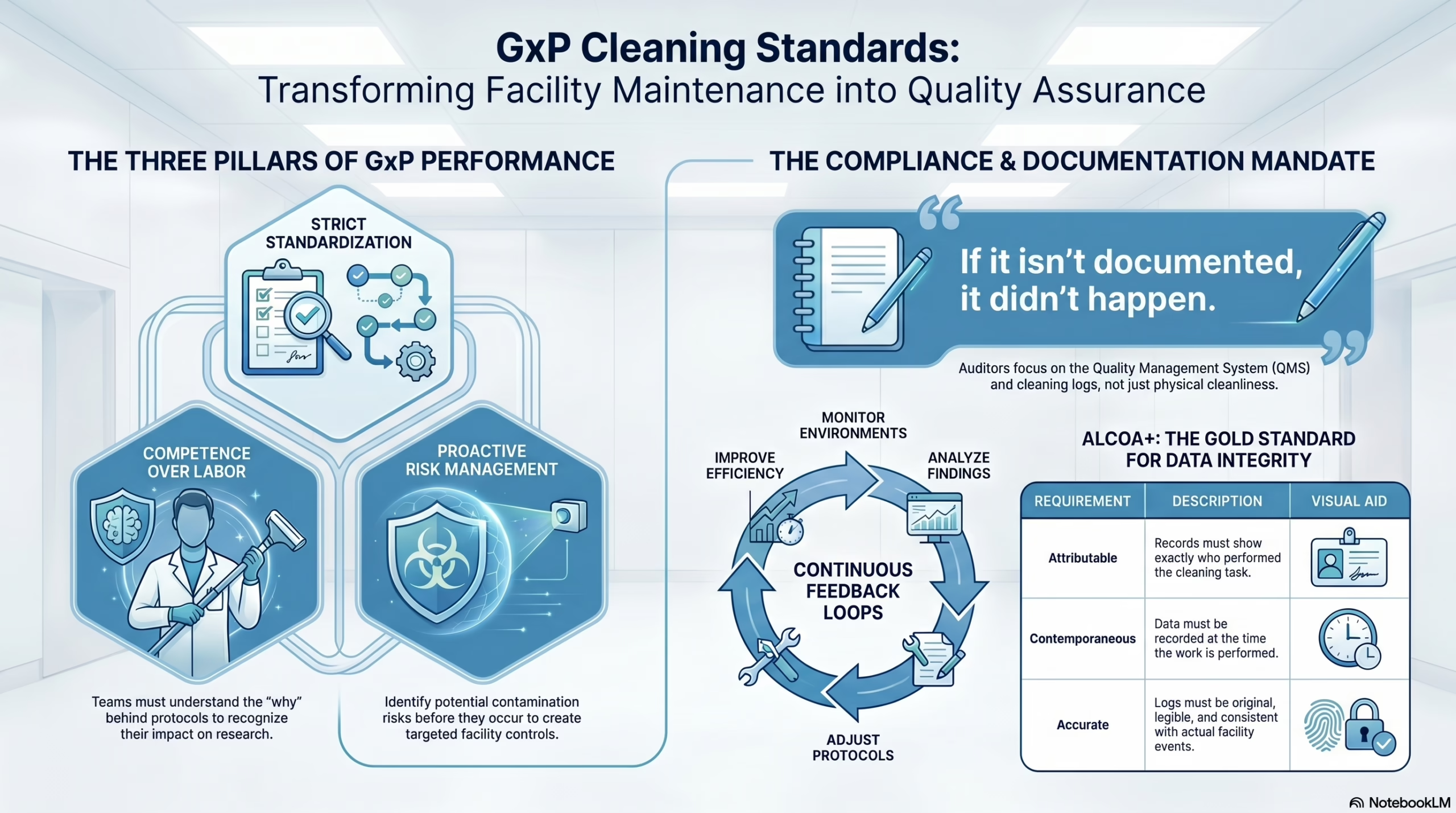
Note that GxP isn’t a simple rulebook or list of regulations. Instead, it’s a philosophy of quality assurance. It was designed at its core to create a culture of accountability. It does so through several key pillars:
- Standardization: Every process from cleaning the floors to disinfecting equipment and surfaces must be done using the exact same documented, approved process every time. This eliminates unpredictable variables and minimizes the risk of overlooked tasks and other human errors.
- Documentation: During an audit, if you don’t have documents that something was done, the auditor assumes it didn’t happen. Data must follow the ALCOA+ system: it must be Attributable, Legible, Contemporaneously recorded, Original, and Accurate in addition to being complete, consistent, enduring, and available.
- Competence: GxP requires your cleaning team to not only be trained but also show that they are qualified. This means they need to do more than understand “how” to properly clean labs and other environments, they need to fully understand the “why” behind everything they do. This helps them recognize the impact of their actions and understand their importance.
- Audits: Another requirement is periodic internal and external audits. These audits are designed to challenge your system, identify weak areas and vulnerabilities, and ensure that your cleanroom and lab practices align with the requirements of your industry.
- Risk Management: GxP requires that you take a proactive approach to risk management. This means identifying potential risks before they become an issue and putting an action plan in place to mitigate them. By doing so, you can create targeted controls that protect your research, production, and personnel.
- Improvements: It’s important to remember that quality is dynamic and always-changing. To keep up with these changes, GxP outlines various feedback loop strategies that involve monitoring your environments, collecting and analyzing these findings, and adjusting your cleaning protocols as needed to improve your overall efficiency.
Why Documentation is Critical to FDA and EMA Expectations
Being audited or going through a regulatory inspection is a difficult and rigorous process. When the FDA or EMA sends an inspector to your facility, they’re not simply looking for dirt on the floor or dust on your equipment. Instead, they’re primarily focused on inspecting and testing your Quality Management System (QMS).
In order to show that your QMS is following all required protocols, you need to be able to provide proper cleaning and documentation. This is the evidence necessary to show that your contamination control strategy is effective. If you don’t have logs showing what specific cleaning agents were used, where they were used, and who used them, then your facility is likely going to be marked as non-compliant. This can then lead to costly delays, regulatory citations, fines, and, in a worst-case scenario, even product recalls. Remember, if it’s not documented, in the eyes of an auditor, it didn’t happen.
GxP cleaning standards ensure your lab isn’t just clean, it’s fully compliant. These standards provide the documentation strategies to create traceable processes that prove your facility is consistently managed. During an audit, these documents will show you operate with integrity.
The SourceONE Difference: Integrating GxP into Cleaning Operations
Here at SourceONE, we understand that for those in the life science industries, cleaning involves more than sweeping, dusting, and vacuuming. It’s a specialized task that must be done correctly. To that end, we do more than offer janitorial services; we act as an extension of your quality team. Our cleaning protocols are based on GxP principles, and we create custom processes for every client to ensure that your facility is always compliant and audit-ready.
We use a three-prong approach to compliance:
Meticulously developed standard operating procedures
Every client—every facility a client has, in fact—has its own unique requirements. Just because we have a cleaning protocol for a client in the same industry doesn’t mean that protocol is going to meet your unique requirements. A protocol for one of your facilities may not match the needs of another of your facilities. Because of this, we work closely with you to develop a standard operating procedure (SOP) for every cleaning task at each facility. Whether you have an ISO-certified cleanroom or a laboratory that requires specific sanitation for organic materials, our team will follow verified, step-by-step instructions closely. We will also sit down with you at regular intervals to review the current SOPs and update them as needed to meet changes in your facilities or regulations.
Training and qualifications
A team is only as effective as the training they’ve received. We make certain all of our personnel have taken comprehensive classroom and hands-on training designed specifically for controlled environments. In addition to being trained in how to clean your space, they also take courses on GxP compliance, cleanroom gowning requirements, and the importance of documentation and data integrity. When a SourceONE cleaning team enters your facility, they’re not just janitorial staff, they are qualified professionals in cleaning techniques and practices.
Validation and audit-ready documentation
We specialize in documentation, and we can provide records necessary for your own internal reviews as well as audits anytime you need them. Our documentation includes the following:
- Validation logs that provide a clear record that cleaning procedures were performed according to the protocols put in place.
- Training records that provide documented proof of all team member’s qualifications and competencies.
- Ongoing monitoring that helps you maintain the paper trail of documents that are required to show continuous quality control for any audit.
Partner for Success with SourceONE
If you follow GxP for your facilities, you need a maintenance partner that understands these protocols and is ready to implement them. You need a partner who doesn’t just clean—they document, validate, self-evaluate, and improve.
SourceONE provides that level of service. Our cleaning processes are aligned with your specific SOPs and your industry’s regulations to ensure that you don’t have to worry about cleaning or facility audits. Instead, you can focus on your core mission and on the research and production only your team can do.
Don’t leave your facility’s cleanliness and your compliance to chance. Reach out to SourceONE today to learn how we can assist you in maintaining the highest standards of GxP compliance.